
October 9, 2026
Generators are essential power sources for commercial buildings, industries, construction sites, hospitals, warehouses, and residential complexes. However, when a generator becomes outdated, damaged, inefficient, or unsuitable for current power requirements, keeping it unused can occupy valuable space and create unnecessary maintenance concerns. In such situations, selling the equipment as scrap can be a practical way to recover some of its value.
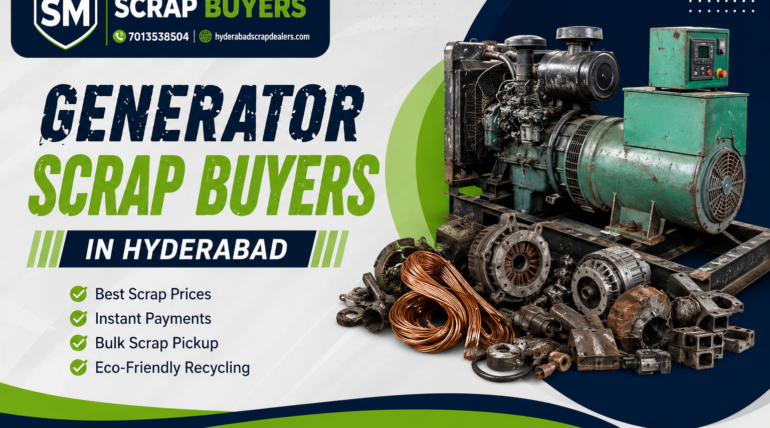
Generator scrap buyers in Hyderabad help individuals, businesses, factories, and commercial property owners dispose of unwanted generators while recovering value from reusable components and recyclable materials. Whether you have a small diesel generator, a large industrial power unit, or an old standby generator, understanding the scrap-selling process can help you make an informed decision.
Hyderabad’s growing industrial, commercial, and infrastructure sectors create a continuing need for equipment disposal and metal recycling. By choosing a responsible approach to generator scrap selling, owners can clear unused machinery, improve workplace space, and contribute to better resource management.
Why Is Generator Scrap Recycling Important?
Old generators contain several materials that can be recovered and reused. These may include iron, steel, copper, aluminium, electrical wiring, and other recyclable components. Instead of allowing an unused generator to deteriorate in a storage area, recycling can help return valuable materials to the manufacturing supply chain.
Generator scrap recycling also supports more efficient waste management. Recovering metals reduces the need to obtain the same materials entirely from newly extracted resources. Proper dismantling and sorting can further improve the usefulness of recyclable components.
For businesses, removing obsolete generators can free up valuable floor space, reduce clutter, and make maintenance areas safer and more organized. For property owners, selling unused equipment can simplify renovation, redevelopment, and facility upgrades.
Types of Generators Accepted by Scrap Buyers in Hyderabad
Generator scrap buyers may handle different types of equipment depending on their purchasing capacity, transportation facilities, and material recovery requirements.
1. Diesel Generator Scrap
Diesel generators are widely used in factories, commercial buildings, construction projects, and backup power installations. When these units become inefficient, damaged, or uneconomical to repair, they may be sold as scrap. Their frames, metal housings, engines, and selected internal components can contain recoverable materials.
2. Industrial Generator Scrap
Industrial generators are generally larger and heavier than residential or small commercial units. These machines may be installed in manufacturing plants, warehouses, production facilities, and industrial estates. Their scrap value depends on factors such as total weight, construction materials, condition, and the proportion of recoverable metals.
3. Old and Non-Working Generators
A generator does not necessarily need to be operational to have scrap value. Units with engine failure, electrical faults, damaged alternators, worn-out components, or long periods of inactivity may still contain useful recyclable materials.
4. Silent Generator Scrap
Silent generators feature acoustic enclosures designed to reduce operating noise. When these units reach the end of their useful life, their metal enclosures, frames, and internal components may be suitable for recycling. The actual value depends on the materials present and their condition.
5. Generator Alternators and Electrical Components
Alternators, copper windings, cables, control panels, and other electrical components may have separate recovery value. However, the quantity and type of recoverable material vary by model. Proper assessment helps determine whether the equipment should be evaluated as a complete unit or according to its individual components.
How Is Generator Scrap Value Determined?
One of the most common questions among generator owners is how much their old equipment is worth. There is no single fixed price for every generator because scrap value depends on several important factors.
Generator weight: Heavier equipment may contain more recyclable material, but its total weight alone does not determine the final price.
Metal composition: Copper, aluminium, steel, and iron have different market values. The quantity and accessibility of each material can influence the offer.
Working condition: A functioning generator with reusable components may attract a different valuation from a completely damaged unit. However, this depends on the buyer’s intended use and resale or recycling opportunities.
Brand, model, and capacity: The generator’s specifications can help identify its construction, component composition, and potential for parts recovery.
Dismantling and transportation: Heavy equipment may require lifting machinery, skilled workers, and suitable transport. The responsibility for these arrangements can affect the final amount received by the seller.
Current scrap market rates: Metal prices change according to market conditions, material demand, and regional trading activity. Obtaining a current quotation is therefore more reliable than depending on an old estimate.
Before accepting an offer, request a clear explanation of the valuation method, weighing process, transportation arrangements, and any deductions that may apply.
The Process of Selling Generator Scrap in Hyderabad
Selling an old generator becomes easier when the process is organized in advance. Following a few simple steps can help prevent misunderstandings and unnecessary delays.
Step 1: Identify the Generator Details
Collect basic information such as generator capacity, fuel type, manufacturer, approximate age, location, and operating condition. Photographs of the complete unit, engine, alternator, and identification plate may help with an initial assessment.
Step 2: Request a Scrap Evaluation
Share the available details and request a quotation. For large industrial generators, an on-site inspection may be necessary because photographs alone may not reveal the equipment’s complete condition or material composition.
Step 3: Compare Offers
If practical, obtain quotations from multiple generator scrap buyers in Hyderabad. Compare the proposed price, weighing arrangements, collection charges, payment terms, and estimated removal schedule instead of choosing solely on the basis of the highest initial offer.
Step 4: Prepare the Equipment
Before removal, ensure the generator is shut down and isolated from electrical connections. Fuel, lubricants, batteries, and other potentially hazardous components should be handled by qualified personnel using appropriate safety procedures.
Step 5: Arrange Collection and Transportation
Large generators can be difficult to move because of their size and weight. Confirm whether the buyer will arrange loading equipment, lifting support, transport, and site clearance. The removal plan should account for access restrictions and workplace safety.
Step 6: Complete Documentation and Payment
Confirm ownership, agree on the final amount, and maintain a record of the transaction. Businesses may also need internal asset-disposal approvals and relevant accounting documents. Payment terms should be agreed upon before the equipment leaves the premises.
Benefits of Choosing Local Generator Scrap Buyers in Hyderabad
Working with a local buyer can make equipment collection and communication more convenient. Depending on the location and the buyer’s capabilities, local arrangements may reduce travel time and simplify inspection scheduling.
Hyderabad includes industrial and commercial areas such as Jeedimetla, Balanagar, Kukatpally, Patancheru, Uppal, and other manufacturing and business locations. Generator owners in these areas may seek scrap collection services when upgrading machinery, clearing warehouses, renovating facilities, or removing obsolete power equipment.
A suitable buyer should demonstrate transparent pricing, safe handling practices, clear payment conditions, and the ability to manage the generator’s size and weight. For larger units, experience with industrial equipment removal is especially important.
Before finalizing a transaction, verify the buyer’s identity, discuss the collection process, and establish who is responsible for loading and transportation. These precautions can help make the disposal process smoother and more predictable.
Environmental and Safety Considerations
Generators should not be dismantled casually because they may contain residual fuel, engine oil, coolant, batteries, and electrical components. Improper handling can cause spills, injuries, or environmental contamination.
Generator removal should begin with safe isolation from power supplies and confirmation that the unit cannot start accidentally. Fuel and lubricants should be drained and managed by trained personnel according to applicable safety and waste-handling requirements. Batteries and electronic components may require separate collection through suitable recycling channels.
Owners should also ensure that the equipment is removed without damaging nearby machinery, electrical installations, flooring, or building infrastructure. For industrial sites, a planned lifting and transportation procedure can help reduce operational risks.
Responsible scrap disposal is not simply about selling unwanted metal. It also involves ensuring that reusable components and recyclable materials are recovered appropriately while hazardous waste is handled through suitable channels.
Conclusion
Generator scrap buyers in Hyderabad provide a practical option for disposing of old, damaged, unused, and obsolete power-generation equipment. Whether the generator comes from a factory, commercial building, construction site, warehouse, or residential property, a careful selling process can help recover material value while creating additional space.
Understanding the factors that influence scrap prices, comparing quotations, arranging safe transportation, and maintaining proper transaction records can make the experience more straightforward. Generator owners should also pay attention to environmental responsibilities and ensure that hazardous materials are handled correctly.
By evaluating the generator’s condition, checking current scrap rates, and selecting a buyer with appropriate equipment-handling capabilities, sellers can make better decisions about unwanted machinery. A well-managed generator scrap transaction benefits both the equipment owner and the recycling process by giving recoverable materials an opportunity to re-enter productive use.