
July 29, 2026
Stainless steel is one of the most valuable and recyclable metals used across industries, commercial establishments, and residential properties. From manufacturing units and fabrication workshops to hotels, hospitals, and construction projects, stainless steel products are widely used because of their strength, corrosion resistance, and long service life. However, damaged, outdated, or surplus stainless steel materials eventually become scrap, creating the need for responsible recycling.
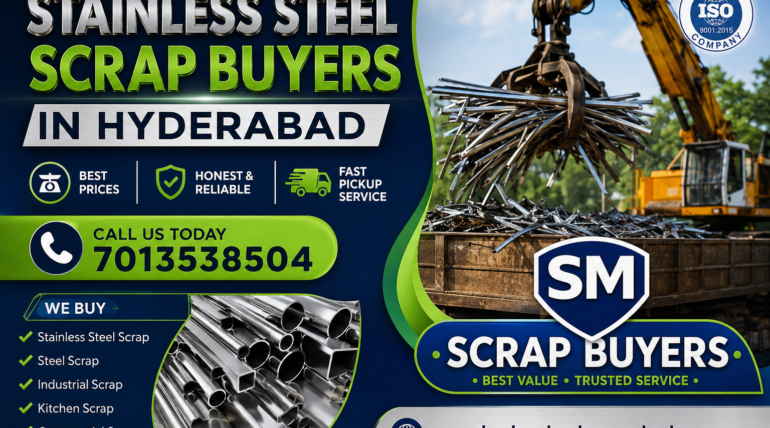
Stainless Steel Scrap Buyers in Hyderabad play a significant role in collecting, sorting, and recycling stainless steel waste, ensuring that valuable materials are reused instead of ending up in landfills. Recycling stainless steel not only generates financial returns for scrap owners but also supports environmental conservation by reducing the demand for newly mined raw materials.
Whether you have industrial scrap, household stainless steel items, or commercial metal waste, professional scrap buyers help simplify the recycling process while promoting sustainable resource management.
What is Stainless Steel Scrap?
Stainless steel scrap refers to discarded stainless steel materials that can be recovered and processed for reuse. Unlike many other materials, stainless steel retains its quality after recycling, making it one of the most sustainable metals in the world.
Common examples of stainless steel scrap include:
- Kitchen sinks and utensils
- Stainless steel pipes and tubes
- Industrial machinery parts
- Restaurant equipment
- Steel sheets and coils
- Railings and grills
- Storage tanks
- Fabrication leftovers
- Structural steel components
- Manufacturing offcuts
Instead of disposing of these materials, recycling allows them to become valuable raw materials for future manufacturing.
Importance of Stainless Steel Recycling
Recycling stainless steel offers numerous environmental and economic benefits. Every kilogram of stainless steel recycled reduces the need for extracting natural resources such as iron ore, chromium, and nickel.
Some major advantages include:
- Conservation of natural resources
- Reduction in landfill waste
- Lower greenhouse gas emissions
- Energy savings during manufacturing
- Reduced mining activities
- Sustainable industrial growth
- Better waste management practices
Because stainless steel is 100% recyclable, it can be processed repeatedly without losing its quality or durability.
Types of Stainless Steel Scrap Accepted
Professional Stainless Steel Scrap Buyers in Hyderabad generally purchase a wide variety of stainless steel materials from different sectors.
These may include:
Industrial Stainless Steel Scrap
Factories often generate large quantities of stainless steel scrap during production. This includes machine parts, fabrication leftovers, metal sheets, pipes, valves, and industrial equipment.
Commercial Stainless Steel Scrap
Hotels, restaurants, shopping malls, hospitals, and offices frequently replace stainless steel furniture, kitchen equipment, shelving systems, and storage units that can be recycled.
Residential Stainless Steel Scrap
Homeowners can recycle stainless steel utensils, sinks, grills, gates, railings, furniture, and damaged appliances containing stainless steel.
Construction Stainless Steel Scrap
Construction and renovation projects produce stainless steel waste such as beams, pipes, rods, fencing materials, structural sections, and reinforcement components.
Fabrication Scrap
Metal fabrication workshops generate cutting waste, rejected components, offcuts, and unused stainless steel sheets suitable for recycling.
Benefits of Selling Stainless Steel Scrap
Selling stainless steel scrap provides several advantages beyond simply clearing unwanted materials.
Additional Income
Unused stainless steel retains considerable market value. Selling scrap allows businesses and individuals to recover part of their investment.
Better Space Utilization
Old metal occupies valuable storage space. Removing unused scrap creates cleaner, safer, and more organized workplaces.
Environmental Responsibility
Recycling significantly reduces environmental pollution while conserving energy and natural resources.
Reduced Disposal Costs
Instead of paying for waste disposal, scrap owners can convert unwanted materials into revenue.
Supports Circular Economy
Recycled stainless steel becomes raw material for manufacturing new products, reducing dependence on newly extracted metals.
Industries That Generate Stainless Steel Scrap
Many industries regularly produce recyclable stainless steel waste.
These include:
- Manufacturing industries
- Engineering workshops
- Automobile industries
- Pharmaceutical companies
- Food processing units
- Hotels and restaurants
- Hospitals
- Construction companies
- Chemical industries
- Fabrication workshops
- Educational institutions
- Warehouses
- Power plants
- Textile industries
Proper recycling ensures these industries manage waste responsibly while recovering value from discarded materials.
Factors Affecting Stainless Steel Scrap Prices
The value of stainless steel scrap depends on several important factors.
Grade of Stainless Steel
Different grades contain varying amounts of chromium, nickel, and other alloying elements, affecting their market value.
Quantity
Large volumes of scrap often receive more competitive pricing due to transportation and processing efficiency.
Purity
Clean stainless steel separated from other metals generally commands better prices than mixed scrap.
Market Demand
Global metal demand influences scrap pricing, with rates fluctuating based on industrial consumption and raw material availability.
Material Condition
Well-sorted, contamination-free scrap is easier to recycle and typically receives higher valuation.
The Stainless Steel Recycling Process
The recycling process involves multiple stages to ensure efficient recovery of valuable metals.
Collection
Scrap is gathered from industries, commercial establishments, construction sites, and households.
Inspection
Materials are inspected to determine their grade, quality, and composition.
Sorting
Different grades of stainless steel are separated to maximize recycling efficiency.
Cleaning
Oil, plastic, rubber, paint, and other contaminants are removed before processing.
Processing
The scrap is cut, shredded, or compressed into manageable sizes for transportation.
Melting
The processed stainless steel is melted in specialized furnaces.
Refining
Impurities are removed to produce high-quality recycled stainless steel.
Manufacturing
The refined metal is used to manufacture new products for various industries.
Why Proper Scrap Management Matters
Proper scrap management benefits businesses in several ways.
Organized recycling reduces workplace hazards caused by scattered metal waste. It also improves operational efficiency by freeing storage space and ensuring compliance with waste management practices. Recycling helps organizations demonstrate environmental responsibility while supporting sustainable manufacturing.
Tips Before Selling Stainless Steel Scrap
To maximize the value of your stainless steel scrap, consider these practical suggestions:
- Separate stainless steel from other metals.
- Remove plastic, rubber, and non-metal attachments where possible.
- Keep scrap dry and clean.
- Organize materials according to grade.
- Accumulate larger quantities for improved pricing.
- Store scrap safely to prevent contamination.
- Weigh materials accurately before selling.
- Compare current market rates before making a transaction.
These simple practices help improve recycling efficiency and increase the overall value of the scrap.
Environmental Impact of Stainless Steel Recycling
The environmental benefits of recycling stainless steel are substantial. Recycling significantly reduces energy consumption compared to producing new stainless steel from raw materials. It also minimizes mining activities, conserves valuable natural resources, reduces industrial waste, and lowers carbon emissions.
Every recycled stainless steel product contributes to cleaner cities, healthier ecosystems, and more sustainable industrial development.
Choosing Reliable Stainless Steel Scrap Buyers in Hyderabad
When selecting Stainless Steel Scrap Buyers in Hyderabad, it is important to consider several factors to ensure a smooth and transparent recycling experience.
Look for buyers who offer:
- Accurate weight measurement
- Transparent pricing
- Prompt pickup services
- Safe handling practices
- Efficient collection processes
- Proper recycling methods
- Professional customer support
- Fair market valuation
- Timely payment
- Environmentally responsible disposal practices
Working with experienced professionals helps ensure that your stainless steel scrap is recycled efficiently while maximizing its value.
Conclusion
The growing demand for sustainable waste management has made Stainless Steel Scrap Buyers in Hyderabad an essential part of the recycling ecosystem. Stainless steel is a highly valuable material that can be recycled repeatedly without compromising its quality, making it one of the most environmentally friendly metals available today.
Whether generated by industries, commercial establishments, construction projects, or households, stainless steel scrap should never be treated as waste. Instead, it should be viewed as a valuable resource that supports economic growth, resource conservation, and environmental sustainability. By choosing responsible recycling practices, individuals and businesses can reduce waste, recover financial value, and contribute to a cleaner, greener future for Hyderabad.